The Graduate College and the Media Commons of the University Library are pleased to announce the winners of the 2026 Image of Research competition. This annual competition underscores the extraordinary creativity and intellectual diversity of our graduate students.
Thank you to every graduate student who entered, the finalists, and our panel of judges, as well as to visitors of both the online gallery and the on-site exhibit in the Graduate College. Thank you as well to those who voted in the People's Choice competition.
The 2026 Image of Research winners are:
First Place:
by Michelle Patiño-Flores (Anthropology)

I collaborate with Black (and) queer Cuban artists to understand their practices of freedom in a contested political landscape. Protecting the anonymity of my interlocutors is an especially important part of my research, as public critique of the Revolutionary government is sometimes met with state violence. For my ethnographic fieldwork, I practice experimental film photography that obscures and preserves the identity of those represented. To structure my images, I draw from Black Studies theorist Christina Sharpe to apply her techniques of Black Annotation and Redaction. Through her conceptual and technical tools, I create images that protect my interlocutors from uninvited public consumption and state scrutiny and yet welcome the gazes of friends and kin who can readily identify the people and places in the images. The images are therefore intelligible only to the predetermined public of the subjects involved: they are relational... similar to how freedom is relational. It is achieved through communal efforts, for the benefit of communal life.
Second Place:
by Alexa Rojas (Natural Resources & Environmental Sciences)
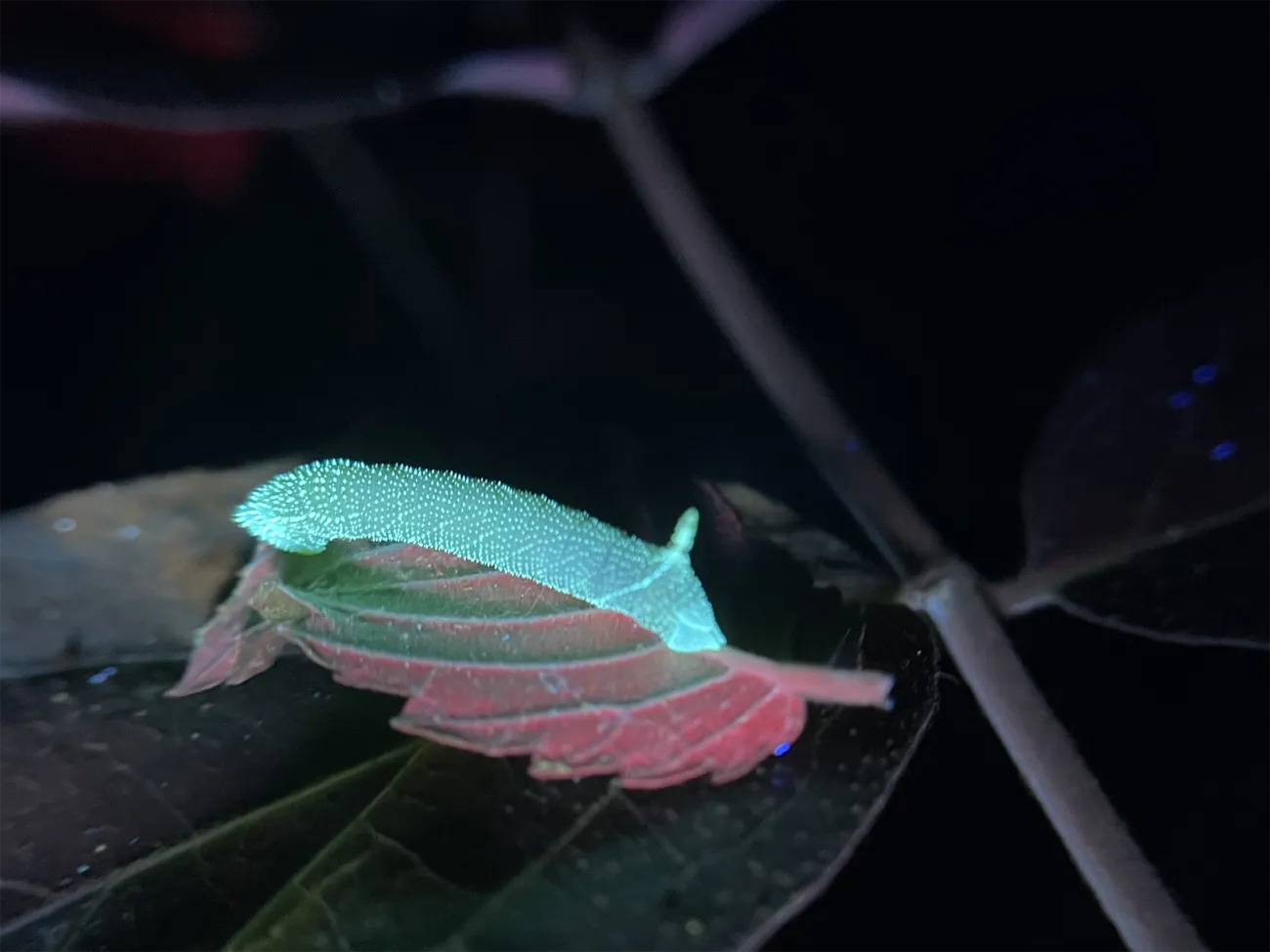
At 9:00 pm, we step into another world. We step out of the familiar landscape of corn and soybean fields in Illinois and into the strange world of a forest after dark. This world is home to millions of organisms, where some are sleeping, but others are just waking up. To answer our question, "how do caterpillars fare in forests surrounded by agriculture and pesticides?" we must answer the question, "how do we find them?" Immensely adept at camouflage and staying hidden, caterpillars are a group of insects that are notoriously difficult to find. However, one tool can level the playing field, and that's the ultraviolet flashlight. Caterpillars are mostly nocturnal, but many fluoresce under UV radiation, so I used UV flashlights to get closer to an animal that is often overlooked. If you've ever wondered what it would be like to explore an alien world, I would argue that it's an experience far more accessible than most would think. Grab a UV flashlight and UV-protective glasses, and you can uncover a whole world of glowing creatures and plants that would otherwise be unseen.
Third Place:
by Kevin Huang (Electrical & Computer Engineering)
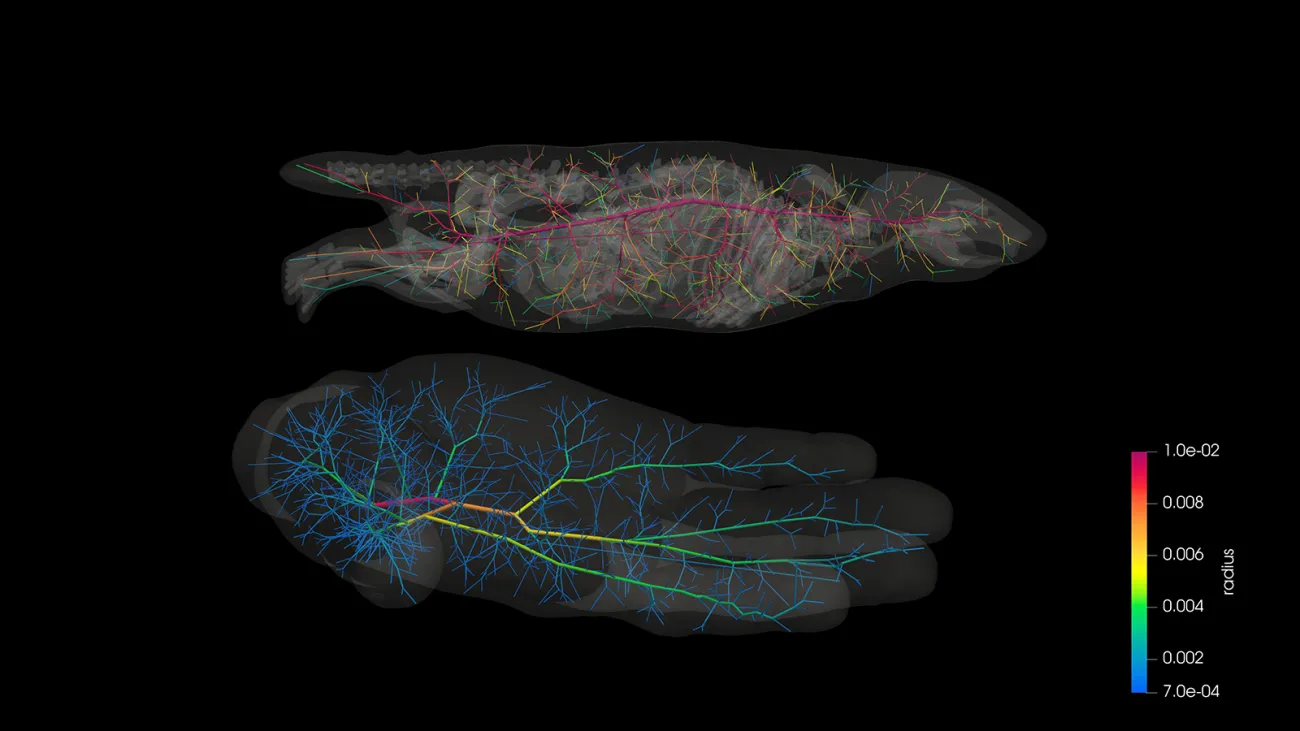
Behold a vision of medical imaging technology progress that no longer requires sacrifice. In this image, a synthetic human hand gently cradles a mouse, both rendered not in flesh but as intricate, glowing maps of stochastic vasculature. In the past, advancing imaging technology has relied on the difficult and costly path of in vivo animal testing. This image represents a pivotal shift. By painstakingly building complex digital models—virtual duplicates of biology—we can develop and test the next generation of life-saving scanners without harming a single living creature. This is more than just a model but a promise of a future where science and empathy walk hand in hand, illuminating the path forward with data rather than suffering.
Honorable Mention:
by Jaden Thompson (Veterinary Medicine)
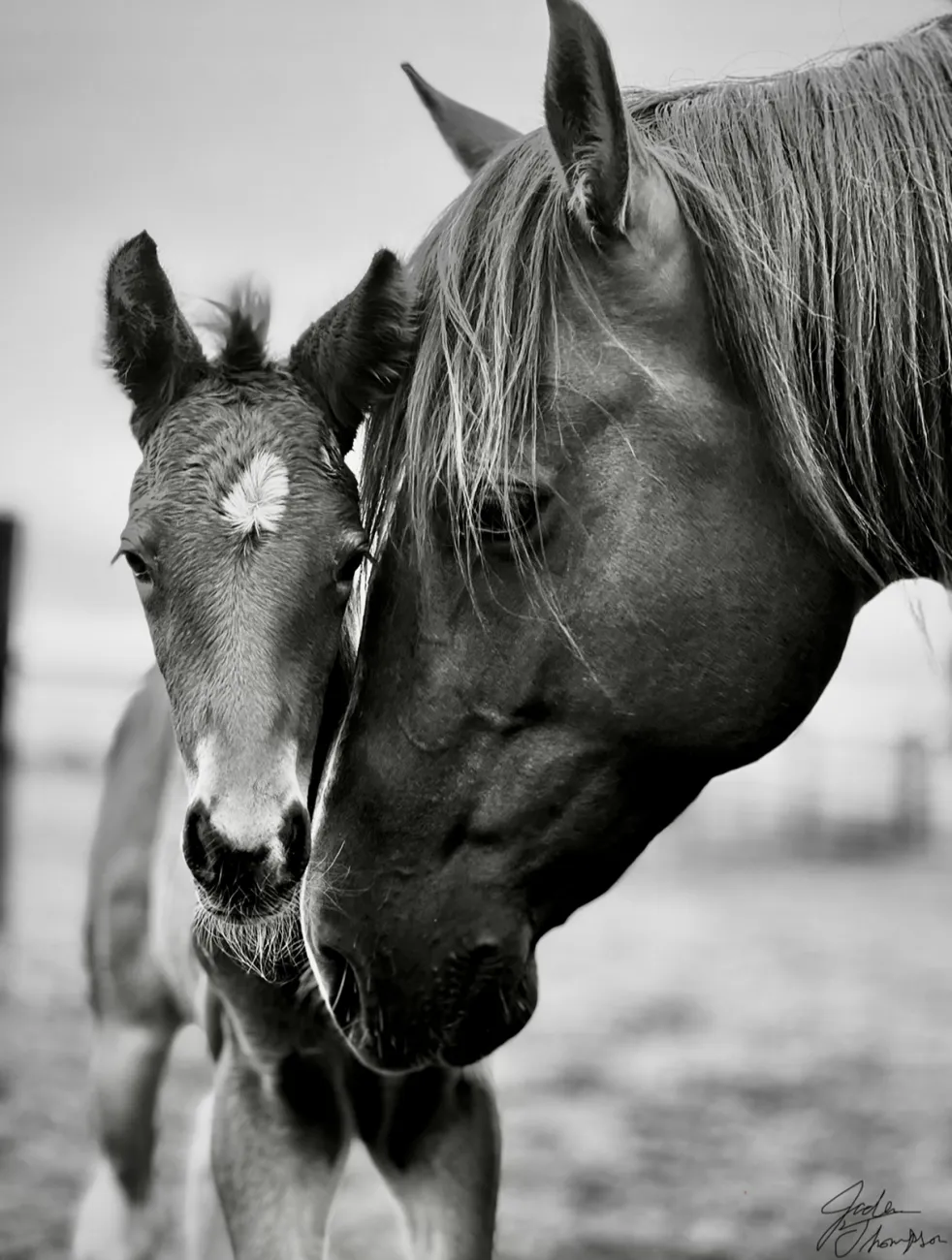
Why? It is the question that first pushed me to study why some mares bring new life into the world, while others, given the same chance, never do. My research on persistent breeding-induced endometritis taught me that creation depends on a delicate balance inside the uterus where inflammation must rise, resolve, and open the door to possibility. When that balance falters, the chance for new life can slip away long before anyone knows something is wrong. I explore this hidden turning point by tracing cytokine patterns in uterine fluid, identifying early scarring in tissue, and mapping changes in gene expression that reveal when healing has drifted off course. These subtle internal signals can shape years of outcomes, deciding whether a foal will ever begin its journey. The image I chose reflects what is at stake. It captures the fragile threshold where life first moves toward becoming. This work has shaped my path as a veterinarian because it reminds me that safeguarding that beginning starts long before birth, in the quiet biology that determines whether new life can take its first step toward the world.
People's Choice:
by Syed Faizaan Ahab (Art Education)
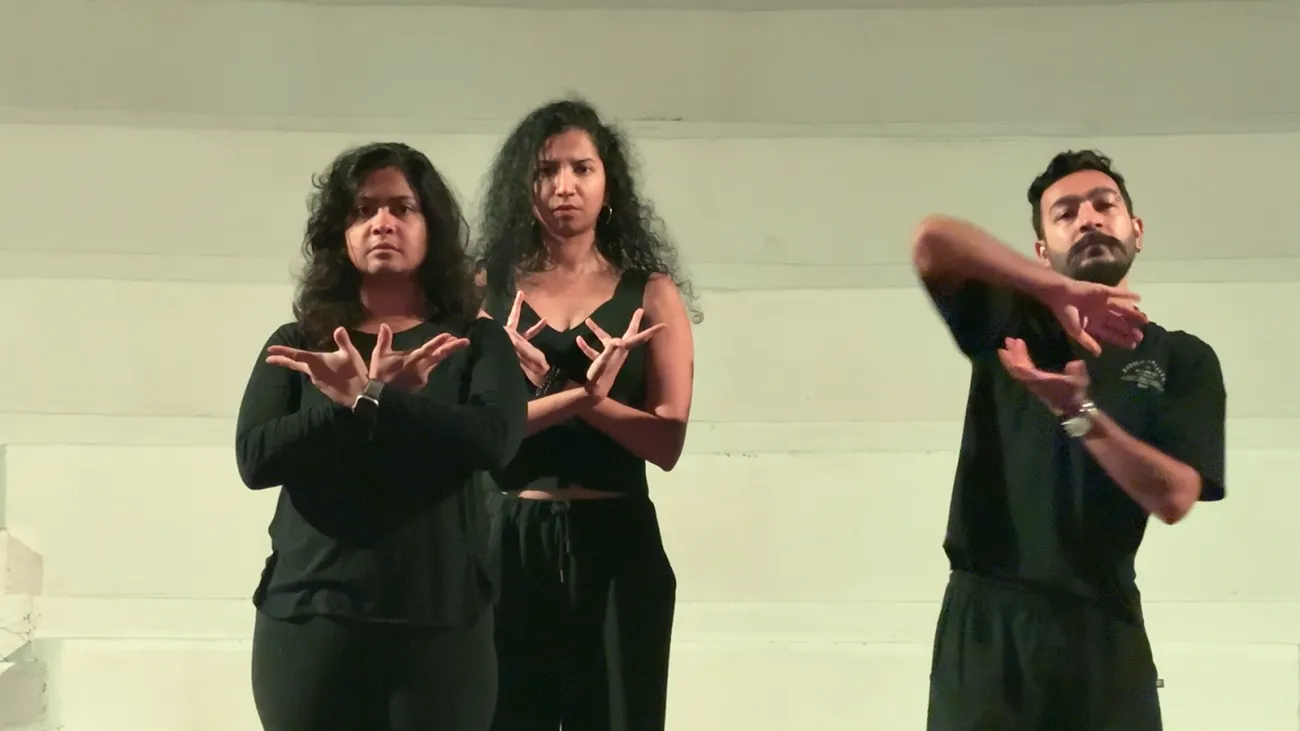
This image captures a video-based research project, Move, at the intersection of movement, listening, and power. The three performers stand facing the viewer, gesturing classical South Asian dance vocabularies. Yet their bodies are held in stillness rather than spectacle. Their hands articulate meaning, but their expressions remain restrained, refusing explanation and performance as entertainment. This tension highlights how embodied knowledge is often rendered hypervisible yet misread within dominant cultural spaces. The stark lighting and frontal composition render the performers almost haunting, neither fully absorbed by the space nor entirely outside it. This visual ambiguity reflects what Allie Martin describes as the politics of listening, where sound and presence are interpreted through social hierarchies rather than neutral perception. Just as Martin argues that sound "happens in interpretation" (Martin, 2025), this image suggests that movement, too, is legible only through the frameworks viewers bring with them. The performers' stillness becomes a form of sonic restraint, an echo of moments where cultural expression is asked to quiet itself to belong. In this way, the image operates as both documentation and critique: a reminder that presence, like sound, does not require permission to exist, even when it is misheard or only partially seen.
The finalists were chosen by an interdisciplinary panel that judged entries on 1) connection between image, text, and research, 2) originality, 3) visual impact and 4) quality of writing.
For more details about the competition, see the Image of Research website.