
YEREVAN, Armenia. – It’s our last day in Armenia. I am sitting at breakfast with two other members of a team of researchers that traveled here together. We are silent, tense. The remaining members — all engineers — are meeting with the customs office in hopes of gaining access to the crates we shipped here from the U.S.
We arrived here four days ago with plans to introduce the sport of wheelchair rugby to Armenia and get feedback on the test and performance of our wheelchairs. Unfortunately, those crates that have been sitting in customs contain crucial pieces of equipment: the rugby wheelchairs, unassembled.
After what simultaneously feels like forever and far too quickly, a notification appears on our phones: “We cleared customs.”
A little after 11 a.m., the crates arrive at the empty basement of an office building. We have less than four hours until we need to be at the event venue with 10 fully assembled rugby wheelchairs. We hurriedly unpack two large crates full of sheet metal parts and sort them into piles.
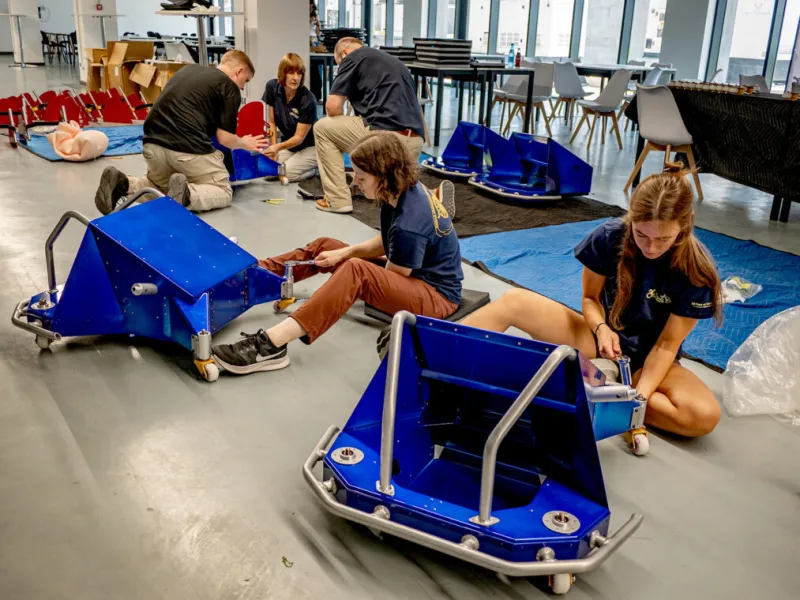
There are no instruction manuals for assembly — that information exists only in the mind of the lead engineer. These specific wheelchairs are not available on the market. They are the first game-ready iteration of a kirigami-inspired rugby wheelchair.
Kirigami, like origami, is an ancient Japanese art of creating 3D designs from flat materials. These wheelchairs are made from thin pieces of sheet metal that are cut with lasers, bent into shape with press brakes and attached using fasteners you can find at your local hardware store. This design allows for improved ease of material acquisition, customization, shipping and assembly compared to those currently on the market. What do all these attributes add up to? Ideally, decreased cost. With current rugby wheelchairs falling somewhere in the $8,000-$15,000 range, cost is a major barrier to participation.
This is usually the point when I would hop on my soap box about the price of adapted sports equipment, but right now, cost is the last thing on my mind. In this moment, all I care about is the speed at which the chairs can be assembled.
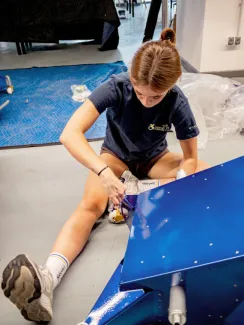
The lead engineer wastes no time. She delegates tasks and guides us through the assembly process. Wielding a hex key, rachet, wrench and a bag full of bolts, I attach the side guards and casters. My tasks are tedious and repetitive, but as one of the few non-engineers in the group, it makes sense that I am given tasks that are difficult to do wrong. There is no time for mistakes.
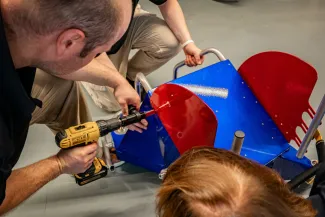
As I work, I can hear the frantic sawing of bumper tubes, the whispered curses of the operator of the rivet tool that is evidently not working correctly, the whirring drone of the drill and the occasional clicks of a camera attempting to document the process.
Our Armenian collaborators work to install data loggers on the wheels in hopes of testing their technology and supplying us with data about the performance (force application, speed and distance covered) of the wheelchairs.
I finish my jobs first and ask how else I can help. The answer: “Go show your face at the venue. We need more time.”
***

While the rest of the team finishes assembling the remaining wheelchairs, I travel to the building where we will host the rugby game. I have the first fully assembled rugby wheelchair with me. The chair is red, blue and yellow (the closest alternative we could find to apricot) — the colors of the Armenian flag.
The venue is an old, stone building. From the outside, I do not expect it to house a gym. I walk through the narrow doorway — so narrow that I need to remove the wheels from the wheelchair to fit it through — and down a couple of steps… not ideal conditions for a wheelchair-focused event, I think to myself. A woman in the main lobby points me to some double doors. Through them, I see the signature wooden planks of a basketball court.
The gym is quiet. The thermostat reads 90 degrees Fahrenheit. The only sources of air are windows along the far wall.
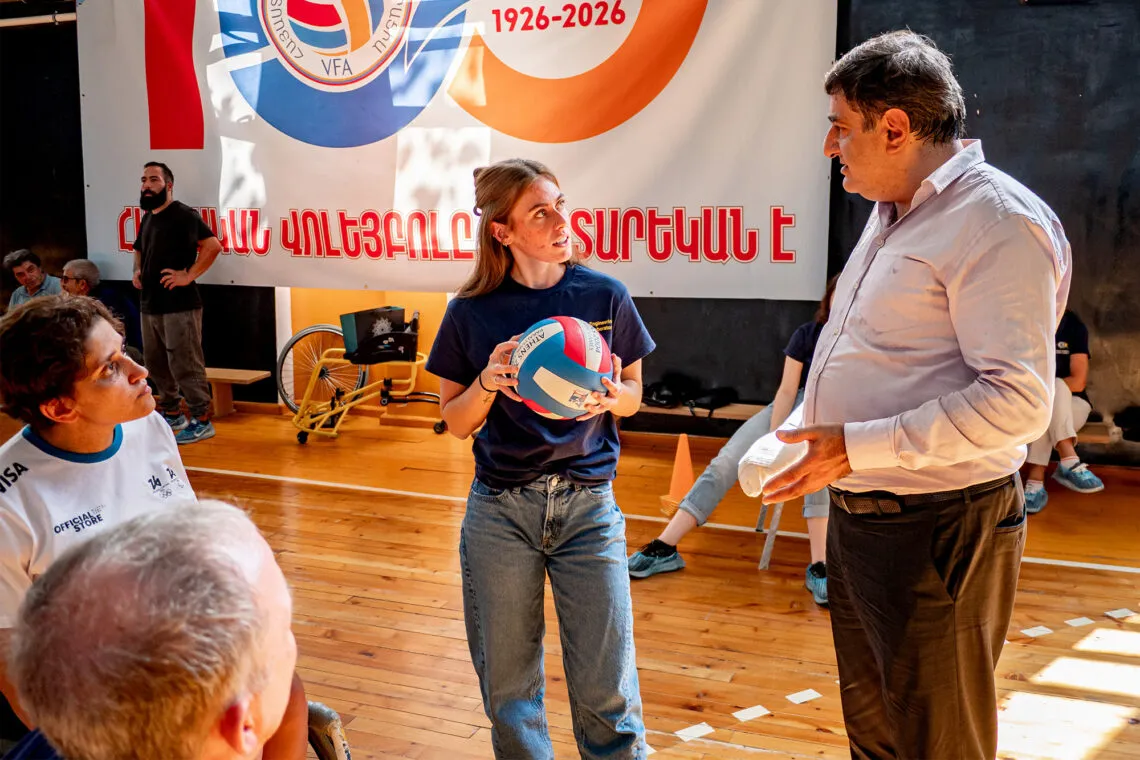
Many of the athletes and attendees are already present. They are eager to see the rugby wheelchairs. I can tell by the looks on their faces that they want to know where the rest of the team is and where the other wheelchairs are. I reassure them that the others will be here soon. In the meantime, I demonstrate the features of the one, fully assembled chair that I brought with me: the adjustable backrest, the cushion. I answer questions from athletes, coaches, clinicians and members of the Paralympic committee. I can feel the tension growing. The event started an hour ago, and we have only one chair.
I gather the athletes and begin assessing which size chair they will need. I measure the width of their hips visually or with the help of a tape measure. I allow them to sit in the chair that I brought with me. I ask about points of discomfort and add or remove padding and adjust the backrest tension accordingly. I take note of each athlete’s preferences in hopes of speeding up the fitting process when the time comes.
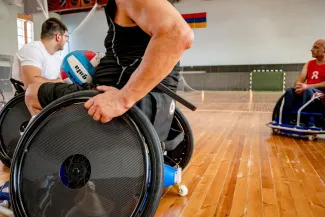
It is after 4 p.m. when the other members of the team arrive with the remaining rugby wheelchairs. We quickly pair athletes to chairs and make adjustments based on my notes.
As the athletes get seated comfortably in the chairs, we guide them through a series of warmup exercises. They push laps around the gym, maneuver around cones, pass the ball and, though it is not one of the drills, take it upon themselves to test the durability of the chairs by crashing into one another. Rugby is a contact sport, after all.
Two years ago, the concept and design for these chairs did not exist. Six hours ago, these exact chairs were nothing more than a myriad of parts sitting in crates. Now, eight athletes are warming up to play a game using these chairs.
Using what information we could gather from the warm-ups, we split the athletes into two teams of equal talent. We pass out jerseys: blue and yellow. We quickly review the rules of the game.
One athlete from each team meets the referee at the center circle. The referee holds the ball in the air above them. The remaining players gather around on their respective sides of the court. The referee drops the ball. A tip-off. In that moment, Armenia’s first-ever game of wheelchair rugby has begun.
Though none of these athletes has played wheelchair rugby before, they are competitive. They push, pass and block. The blue team scores first. The athletes and audience cheer as if they are at a sporting event in a large stadium, as if they have a favorite team. The game goes on like this for four eight-minute quarters. With each minute that passes, the stress of the rushed assembly, the late arrival of the wheelchairs and the scorching temperature of the gym fade into the background. In the end, only one team wins, but you can’t tell which by looking at the athletes. I won’t pretend to know Armenian, but I certainly know a smile when I see one, and this gym is full of them.
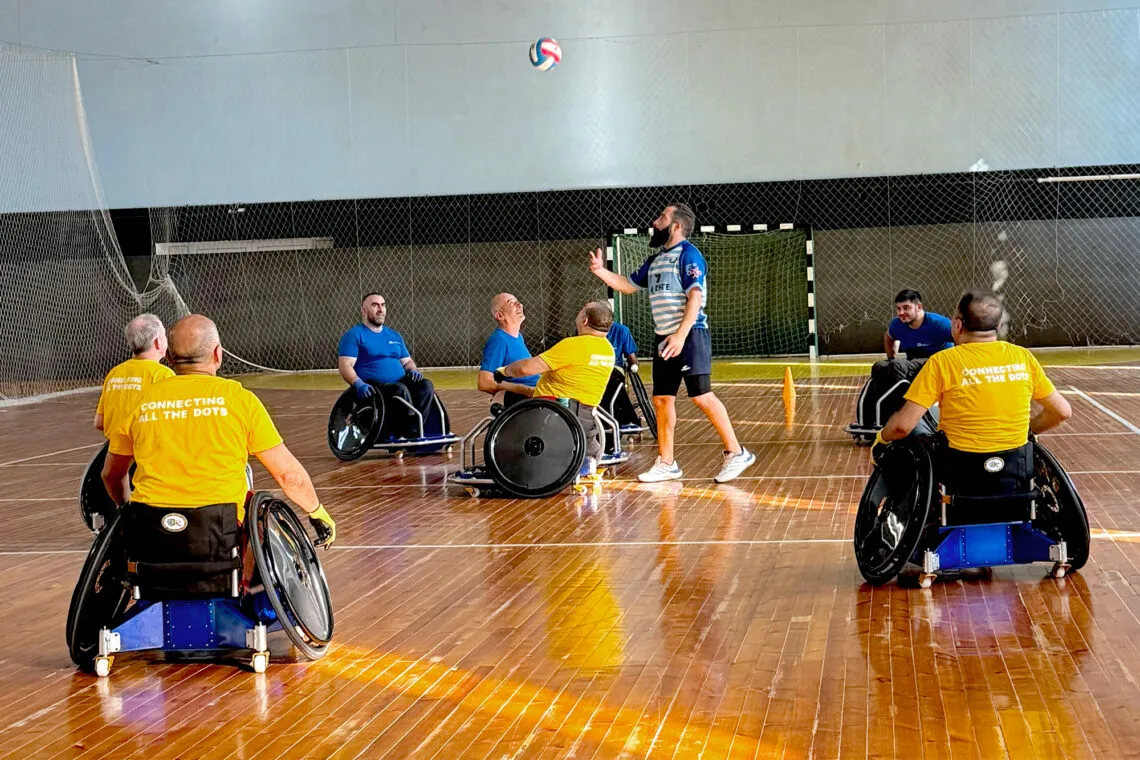
Though the smiles offer feedback all on their own, there is more work to be done. Our collaborators will assess kirigami rugby wheelchair performance and usability data and will conduct formal athlete interviews regarding their interactions with the equipment and experiences with rugby. We will use this information to update the wheelchair design to better serve the athletes who use them.
The grant that helped fund this project is called the “Power of Play.” As I stand in this gym full of palpable, mutual excitement and connection between strangers who do not all speak the same language, I realize that this event is a perfect example of just how powerful sport and recreation truly are.
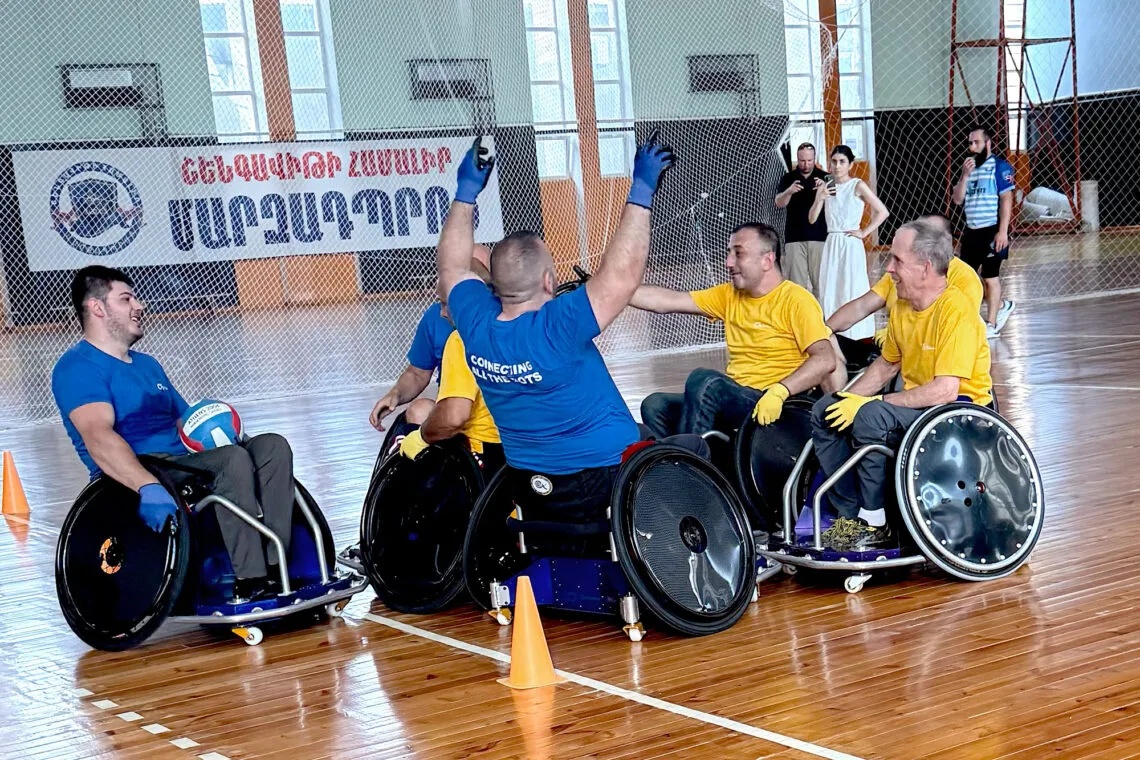
The event ends with a medal ceremony, some closing remarks and a group photo to commemorate the occasion. Exhausted and sweaty, we pile the rugby wheelchairs into a rusty blue van at the back of the building. In just a few hours, we will board our plane back to the United States. But the wheelchairs? Those will stay here.
What happens with these wheelchairs after we leave is out of our hands. The goal is that they will eventually be used to start an Armenian rugby league. But something like that takes time. Until then, I just hope that the wheelchairs are used for pick-up games, recreational leagues, you name it, just so long as others to get a taste of the magic that we experienced in this gym today.
Editor’s notes:
This research is part of the Kirigami Design and Advanced Manufacturing Process for Transforming Adaptive Sports Equipment, a joint project of the University of Illinois Urbana-Champaign and the University of Pittsburgh. Health and kinesiology professor Ian Rice is the director of the Rehabilitation Engineering Research Center at the U. of I. and a project leader for the Kirigami research at Illinois. He also is an affiliate of the Beckman Center for Advanced Science and Technology at the U. of I.
The National Institute on Disability Independent Living and Rehabilitation Research supports the Kirigami research.
Subscribe to Behind the Scenes for short blog posts, photos and videos from Illinois faculty, researchers, students and staff about their work and lives. Send an email with “SUBSCRIBE BTS” in the subject line.
This article was reposted from the Strategic Communication and Marketing News Bureau.