When critical public humanities research meets community projects, visible transformations and real-world intervention in society become possible.
When I joined Driven to Reach Excellence and Academic Achievement for Males (DREAAM) this summer to support its AgHope initiative, I expected to conduct and blend conventional research with community fieldwork as a doctoral student in anthropology at the University of Illinois.
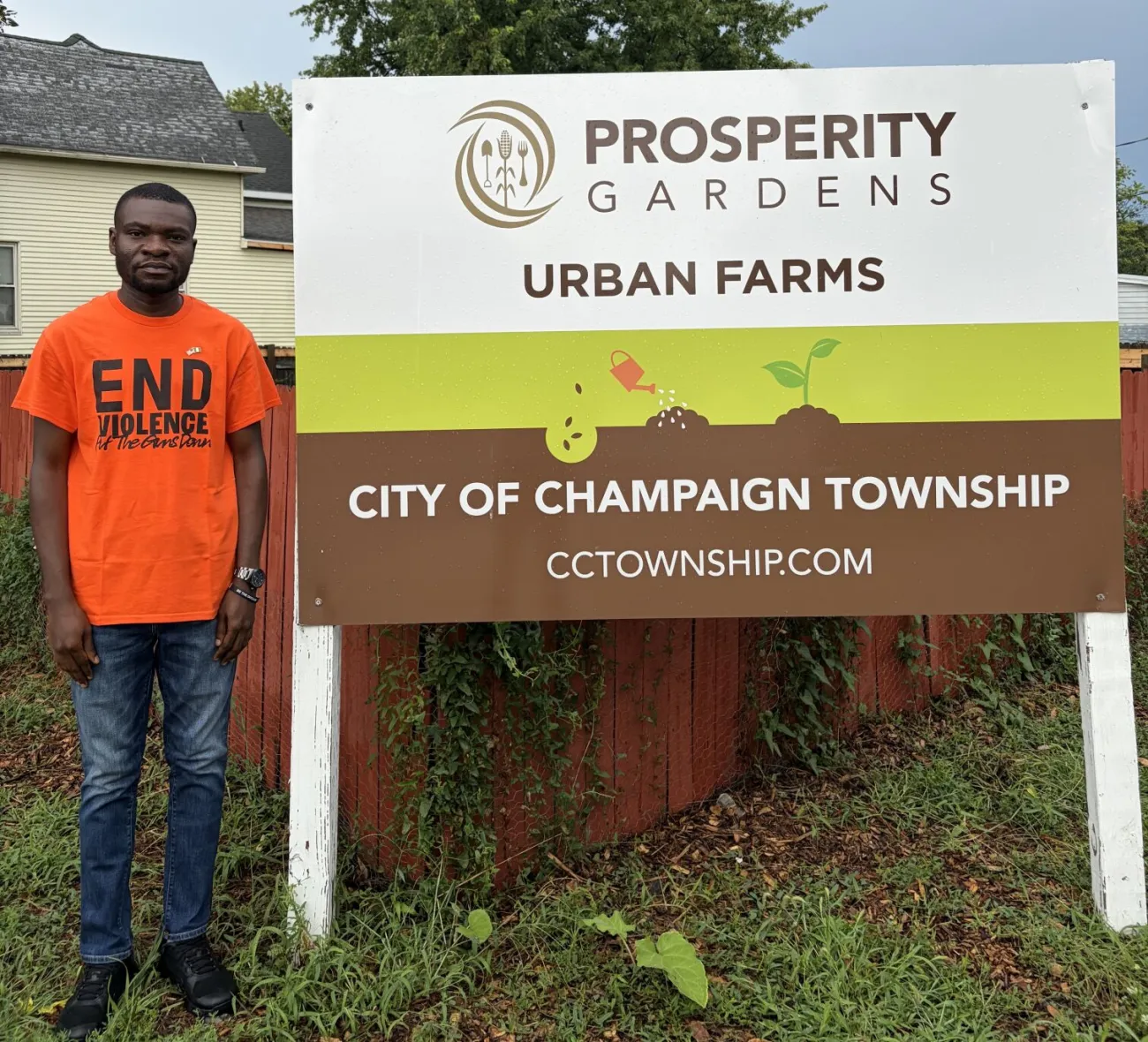
What I did not expect was how deeply working alongside a community organization and local youth at Prosperity Gardens in Champaign would reshape my understanding of community work, sustainable development projects, youth leadership, intergenerational mentorship and human connection.
Supported by a Humanities Without Walls summer bridge program funded by the Mellon Foundation, my primary goal was to help operationalize and evaluate DREAAM’s urban-regenerative-agriculture and educational-training programs.
DREAAM is a nonprofit that works to empower African and African American boys, youth and young men by expanding their educational and economic opportunities. At Prosperity Gardens and other AgHope project sites, that vision happens with dirt on your hands and seeds in the ground.
Working side-by-side with youth, young men, staff and community partners in the summer heat, I realized that the urban agricultural project is about far more than growing crops, harvesting them and distributing food for households and families. It creates a safe, supportive space where young Black people, especially youth, can step away from everyday pressures and institutional stereotypes to grow as confident, connected and resilient leaders.
In these spaces, physical labor serves as a bridge to open conversation, mutual trust and personal growth.
This remarkable experience taught me three key lessons that every community organization, sponsor, leader, researcher and resident should keep in mind:
To learn about these three lessons, read Johnson Opeyemi Adegbola's full article on the News Gazette website.