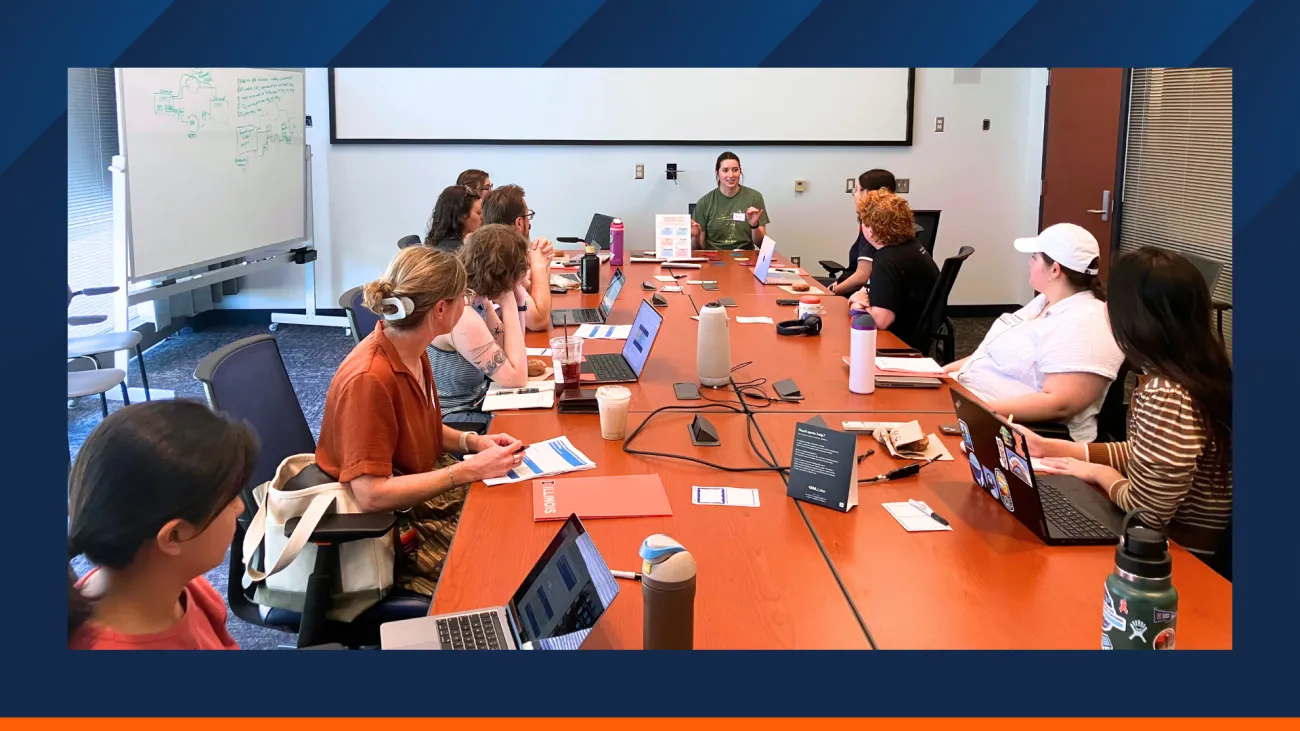
What does it take to turn complex research into an experience that sparks curiosity beyond the university? This fall, eight Illinois graduate students are developing those skills through the Designing & Delivering STEM Outreach Workshop, offered each semester by Illinois Science Explorers.
The workshop helps graduate students build the skills and confidence to communicate their research beyond academic audiences. Students learn to translate complex research concepts into engaging, accessible, and age-appropriate STEM experiences for community audiences, with an emphasis on hands-on activities that encourage curiosity, participation, and STEM learning.
Learning to Communicate Research in New Ways
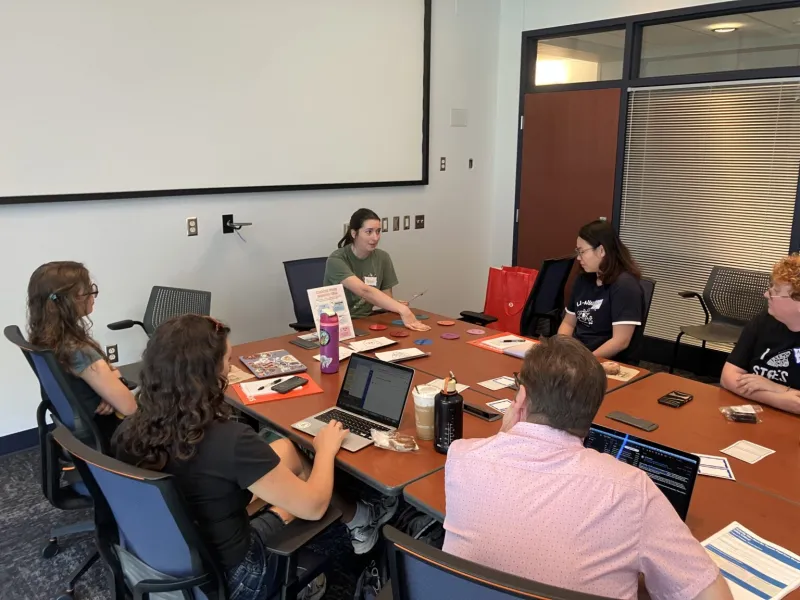
This semester’s cohort represents a range of departments and programs, including Materials Science and Engineering, Integrative Biology, Entomology, Neuroscience, Plant Biology, and the School of Information Sciences. Students’ proposed activities reflect the breadth of research across the cohort, with topics ranging from bird migration and pollinators to how the brain works, plant DNA, disease transmission by insects, transparent materials, and identifying different types of cockroaches.
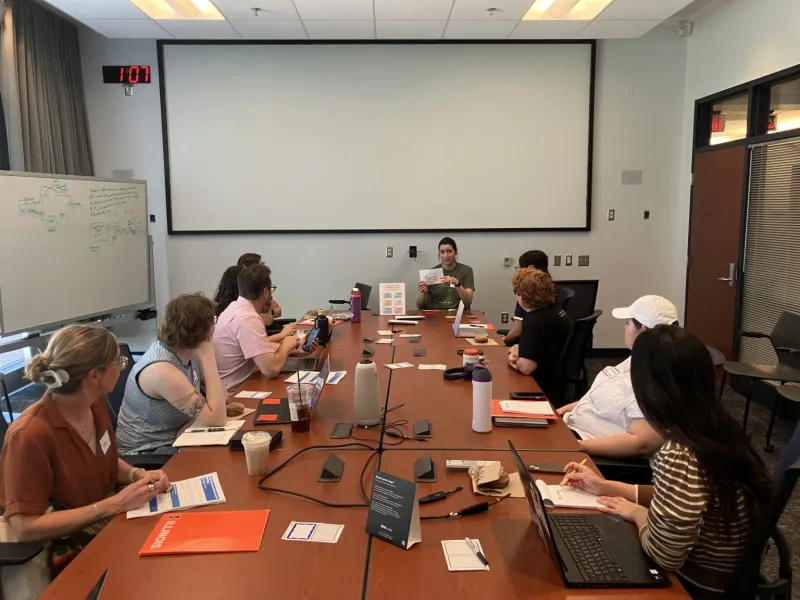
The first session introduced students to key concepts in STEM outreach and science communication. Students have since submitted proposals for outreach activities inspired by their research and are working with the workshop leadership team to refine their ideas. Throughout the remainder of the workshop, they will develop and pilot their activities, receive peer feedback, and make revisions based on what they learn.
This process asks students to think beyond simply explaining their research. They must consider how to make their work understandable and meaningful to different audiences—and how hands-on experiences can invite children to ask questions, explore ideas, and engage with science. In the process, students strengthen practical skills they can carry into future research, teaching, and community engagement.
Putting Outreach Into Practice
The workshop culminates with opportunities for students to bring their activities directly to community audiences. They will first share their activities with K–5 students at University Primary before presenting them at a Family STEM Night with the Champaign Park District later in October.
These experiences give graduate students the opportunity to put their communication and outreach skills into practice while creating opportunities for children and families to engage with research in ways that are accessible, interactive, and relevant to them. By connecting researchers with community audiences, the workshop helps build skills for communicating research beyond academic settings—and creates new opportunities for people to see themselves as participants in science.
This article was reposted from Center for Social & Behavioral Science website.